Checkpoint Vpn Client Download Mac Os X
Posted by admin- in Home -16/12/17var q checkpointvpnclientdownloadmacosxArchitecture. The Perforce Helix server manages a central database and a master repository of file versions. Server Metadata. The Perforce Helix database is. IPFire is a free firewall distribution based on Linux. 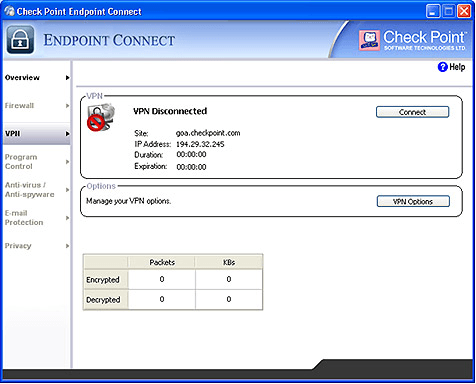 Layer 2 Tunneling Protocol L2. TP over IPsecby Lisa Phifer, Core Competence By submitting your personal information, you agree that Tech. SecTools. Org Top 125 Network Security Tools. For more than a decade, the Nmap Project has been cataloguing the network security communitys favorite tools. Browse our full list of certification exams that are supported through exam dumps. Pass your test in record speed with our dumps featuring latest questions and answers. The media is ablaze over President Trump sharing classified information with Russian foreign officialsbut what is classified information exactly And what happens. Target and its partners may contact you regarding relevant content, products and special offers. You also agree that your personal information may be transferred and processed in the United States, and that you have read and agree to the Terms of Use and the Privacy Policy. Those searching for free VPN client software have many options. In my last column, I discussed Point to Point Tunneling Protocol PPTP a readily available, easy to use client with known vulnerabilities. This month, well consider a more robust VPN client alternative Layer 2 Tunneling Protocol L2. TP over IPsec. L2. TPL2. TP is an IETF standard for tunneling Point to Point Protocol PPP across any intervening network. It forwards data transparently from an access concentrator LAC to a network server LNS. The LAC may be an individual host or an ISPs network access server. For example Consider an ISP that purchases dial up services from another ISP. When subscribers dial into the wholesalers LAC, PPP sessions may be forwarded over an L2. TP tunnel to the resellers LNS. This configuration is referred to as compulsory mode. Consider an individual dialing into a local ISP or associating with a wireless hotspot. After the host is connected to the Internet, data can be sent through an L2. TP tunnel from a VPN client on the host to a VPN gateway. Because the user decides whether and when to open the tunnel, this is known as voluntary mode. In both cases, L2. TP provides data independent framing, the ability to multiplex IP and non IP protocols, tunnel endpoint authentication, and dynamic address assignment. For compulsory tunnels inside private networks, L2. TP by itself may be fine. To tunnel data securely over the Internet, L2. TP must be combined with a protocol that prevents eavesdropping, modification and replay. Securing L2. TPRunning L2. TP over a secure IPsec transport is defined by RFC 3. In this approach, L2. TP packets are exchanged over User Datagram Protocol UDP port 1. UDP payload is protected by an IPsec Encapsulating Security Payload ESP transport mode connection between the LAC and LNS. IPsec ESP provides confidentiality, per packet message authentication, and anti replay protection for all L2. TP, including both control and data packets. In contrast, the Microsoft Point to Point Encryption MPPE used by PPTP encrypts only data and does not prevent forgery or replay. The Internet Key Exchange IKE protocol is used to establish the IPsec transport. First, IKE lets the LAC and LNS authenticate each other with digital certificates or a shared secret. Then, L2. TP authenticates the user over this encrypted transport. PPTP provides user authentication only, over a cleartext channel that risks dictionary attack. IKE also lets the LAC and LNS safely derive crypto keys used by IPsec. MPPE provides weaker key management for example, it cannot ensure that new keys are unrelated to previously used keys like IKE can. Using L2. TP over IPsec is more secure than PPTP, but there are some drawbacks This approach encapsulates application data in PPP, PPP in L2. TP, L2. TP in UDP, UDP in ESP, ESP in IP. Even without counting header bytes, it is easy to see that multi layer encapsulation generates longer packets. IKE authentication with digital certificates is strong, but requiring every client to have its own certificate increases installation complexity. Although you can use a group secret instead, doing so largely negates the added value of IKE authentication. IKE and IPsec have many negotiable options, making configuration more complex than PPTP. However, a default policy that dictates options can reduce complexity. Running IPsec through a device that performs network address translation NAT can be a problem. New draft standards overcome this by encapsulating ESP in UDP. Windows 2. 00. 0XP VPN client. Microsoft championed L2. TPIPsec by including it in Windows 2. Windows XP VPN clients. Strictly speaking, these embedded clients are commercial software, purchased with your licensed copy of Windows. However, they are free in the sense that you dont have to buy or install additional software for each client PC. The Win. 20. 00XP VPN client supports both PPTP and L2. TP. By default, this client attempts to launch an L2. TP tunnel, downgrading to PPTP if L2. TP fails. Launching L2. TP is therefore quite similar to launching PPTP just identify the LNS by IP address or hostname and supply a loginpassword for user authentication. As I discussed last month, Microsofts VPN client offers a choice of authentication methods like PAP, CHAP, MS CHAPv. EAP. Because L2. TP control packets are encrypted by IPsec, password methods like PAP and CHAP can be used safely. Smart cards or digital certificates are still stronger choices. In addition, user certificates stored on smart cards can prevent misuse of lost or stolen PCs that might otherwise pass IKE authentication with a machine certificate stored on disk. To simplify configuration, Win. XP automatically applies a default policy for IKE and IPsec. This causes Windows to automatically launch an IPsec transport mode connection whenever traffic is sent or received over UDP port 1. If this default policy meets your needs, then using L2. TP will be relatively simple. If not, you can set the Prohibit. IPsec registry key and learn how to configure your own Windows security policies. You wont have to install software when using the embedded Win. XP VPN client, but you will need to install IKE credentials. The default policy requires a digital certificate on every client PC. The Microsoft Windows Certificate Authority CA supplies a Web page for users to submit requests and install certificates on their own PCs. Of course, users must enroll when already connected securely for example, before taking a laptop out on the road. You can also use the Windows CA without self enrollment, use another vendors CA, or purchase certificates from a third party service. Certificate enrollment is really the step that makes L2. TP setup more expensive than PPTP. To avoid dealing with certificates, small and home offices may opt for weaker IKE authentication with shared secrets. When doing so, choose a long random string and caution users to protect this password. Because all users must present the same secret, loss or disclosure will impact everyone. If your VPN supports a large user community, certificates may be more hassle up front, but will prove less expensive over time. Another happy middle option is to purchase one group certificate for all L2. TP users. Windows 9. MENT VPN client. Last summer, Microsoft released an L2. TPIPsec VPN client for legacy Win. Windows 9. 8, ME, and NT. This VPN client, developed by Safe. Net for Microsoft, is freely available for download from Microsofts website. That means you wont have to pony up extra cash for client licenses. But this alternative is not quite as simple as using an embedded client youll need to install new software on every PC. On Windows ME, just check to make sure you are running IE 5. Microsoft L2. TPIPsec VPN client. On Windows 9. 8, you must first install Dial Up Networking 1. IE 5. 0. 1 or later, then add the Microsoft L2. TPIPsec VPN client. On Windows NT4, you must start with SP6 or later. Install the Remote Access Service and the PPTP protocol even if you dont plan to use PPTP. What Classified Information Means, and What Happens If You Divulge It. The media is ablaze over President Trump sharing classified information with Russian foreign officialsbut what is classified information exactly And what happens if you disclose it Good news Youve been granted clearance to acquire this not quite top secret knowledge. What Classified Information Is. Generally speaking, classified information is knowledge or material that a government decides is sensitive and requires some kind of special care or protection. Usually laws or regulations are made so only specific groups of peopleusually government officialscan access the restricted content. Ideally, this information is never accessed or learned by those who do not need to know it. This information could be something relatively mundane to the public, like government office recordsor something far more earth shattering, like the names of covert operatives, locations of weapons of mass destruction, or information about ISIS casually being mentioned to Russian officials over coffee. Basically, its the information the U. S. government deems unsafe to be public knowledge. After all, if everyone knew the name of a covert operative, they wouldnt be covert. If a terrorist organization could Google search where weapons were, they could make devastating precision strikes on those locations. You get the picture. The internet is aflame with the news that the National Security Agency may be spying on phone calls Read more Read. The Different Types of Classified Information. To accessor even handleclassified information, you need a formal security clearance issued by the U. S. government. To get this clearance, you need to have a job that requires it, and you must pass a thorough background check. But not all clearances are alike. There are several tiers of classified information sensitivity as defined by Executive Order 1. Here they are going from least sensitive to most sensitive Public Trust General knowledge the public is allowed to know. No clearance required. Confidential The lowest level of classified information. This information could potentially hamper national security efforts if it was disclosed to the public. Secret The second highest level of classified information, and the level that most classified information is held at. The unauthorized disclosure of Secret level information would cause serious damage to national security. Top Secret The highest level of classified information. According to Executive Order 1. Think secret code words for military operations, nuke codes, and maybe aliens or something. Individuals who hold security clearances may access classified information from their tier, as well as some information from tiers below it if necessary. An official document may be marked with one or several of these levels, depending on the sensitivity of the information. The U. S. government chooses the level based on a thorough impact assessment. Theres also a final non official category of classified information known as unclassified. This is formerly classified information that may be released to those with no security clearance. Information may be disclosed on a For Official Use Only basis, like with law enforcement agencies, or be released to the public via the Freedom of Information Act. The internet is full of information, but sometimes what youre looking for needs a differentRead more Read. What Happens If You Disclose Classified Information. People disclose classified information all the time. Jeffrey Fields, a University of Southern California professor who once held Top Secret clearance, explains that it can be difficult to remember what information learned in oral briefings is considered classified Government employees sometimes reveal classified details accidentally in casual conversations and media interviews. We may not hear about it because its not in the interviewees or employees interest to point it out after the fact, or he or she may not even realize it at the time. A former colleague of mine who was a retired CIA analyst used to tell his students he would never knowingly, but almost certainly would inadvertently, share a tidbit of classified information in the classroom. It is very difficult to remember many smaller details that are sensitive. So mistakes are not uncommon. Those with high levels of security clearance deal with a tremendous amount of classified information, and things occasionally slip through the cracks. Take, for example, the case of Senator David Boren accidentally revealing the name of a clandestine CIA agent during a news conference back in 1. Whoops. But what happens if you intentionally disclose classified information without authorization Well, its a federal crime under the Espionage Act of 1. Title 1. 8 of the U. S. Code, Section 7. Basically, it means that anyone who intentionally communicates, furnishes, transmits, or otherwise makes available classified information to an unauthorized person is in big trouble. If youve been watching the Michael Flynn saga unfold, in which Flynn has offered to testify aboutRead more Read. This could mean a prison sentence of up to 1. However, the U. S. More often than not, they target whistleblowers who seek to reveal government misconduct, and let other disclosures slide if theyre not intentionally trying to damage the nations security. So, what about President Trump Will he get in trouble for disclosing classified information to Russian officials Dont hold your breath. As Benjamin Wittes, senior fellow in governance studies at the Brookings Institution, explains to Rachel Martin at NPR, the president has control over classified information. So if the president wants to disclose it, he gets to disclose it. And disclosures that would be a very serious crime if anyone else did them are almost certainly not if the president does them. So, you know, if the question is, is there a criminal problem here, the answer is almost certainly not. Hes calling the shots when it comes to which information is classified or not, so he can spill the beans all he likes. Of course, Wittes is careful to point out that just because what Trump is doing isnt technically against federal law doesnt mean its not a problem. Actions like his ruin major intelligence operations by laying out all of our cards to an adversarial power. Its not illegal, but its not ideal either. Whistleblowing is in the news this week Former Acting Attorney General Sally Yates is preparing to Read more Read. Update The previous explanation on how different security clearances may access information made it sound like Top Secret clearance may look at any and all classified information they want. This is not true. The text above has been changed to clear this up.