Giving A Tenant Notice Template
Posted by admin- in Home -22/11/17var q givingatenantnoticetemplateFree Solicitor Approved Section 2. Notice of Possession Guide. Section 2. 1 Notice of Possession A Section 2. Notice is used when a Landlord requires the Tenant to vacate a rented property by a specified date. It must be used to legally terminate an Assured Shorthold Tenancy AST. NOTE As of 1st October 2. Section 2. 1 Notice in England will become a prescribed form and you must use the correct form for it to be valid. You can get a section 2. A Section 2. 1 Notice of Possession operates under section 2. Housing Act 1. 98. Assured Shorthold Tenancy AST. You can download a section 2. The landlord is able to issue the tenant with a section 2. A landlord has the legal right to retain possession at the end of a tenancy but must follow the correct legal procedure, which includes serving a section 2. The Housing Act 1. Act by requiring this notice to be given in writing. Section 2. 1 of the Housing Act 1. Section 2. 1 notice is served before the fixed term has come to an end or after, when the tenancy has become a periodic tenancy. Our Section 2. 1 Notice forms and instructions can be used for all situations. See here When can a Section 2. Under section 2. 1 of the Housing Act 1. Housing Act 1. 99. In order to invoke this right, he is required to follow the correct legal procedure which involves serving a section 2. A section 2. 1 notice can be issued at any time during the fixed tenancy or during the periodic tenancy. A Section 2. 1 notice to quit can only be used to regain possession of a property at the end of an assured shorthold tenancy. If a landlord wishes to regain possession before the end of the agreed term, this may be possible if he can show certain conditions have been met. In order to do this he must first issue the tenant with a valid section 8 notice to quit. You can get your Section 2. Notice HEREHow do you serve a Section 2. Section 2. 1 of the Housing Act 1. Housing Act 1. 99. Assured Shorthold Tenancy AST with a minimum of two months notice in writing, stating that possession of the property is sought. The two months starts when the tenant receives the notice not when the notice was writtenposted. A Section 2. 1 notice must be served before possession order will be issued by a court. Possession under this section of the Housing Act 1. The tenant is not required to give up possession of a property until a minimum of two months after the Section 2. This includes Section 2. The provisions in section 2. Without prejudice to any right of the landlord under an assured shorthold tenancy to recover possession of the dwelling house let on the tenancy in accordance with Chapter I above, on or after the coming to an end of an assured shorthold tenancy which was a fixed term tenancy, a court shall make an order for possession of the dwelling house if it is satisfied that the assured shorthold tenancy has come to an end and no further assured tenancy whether shorthold or not is for the time being in existence, other than a statutory periodic tenancy andthe landlord, or in the case of joint landlords, at least one of them has given to the tenant not less than two months notice stating that he requires possession of the dwelling house. A notice can be issued more than two months before the end of a tenancy but it should not be dated to expire on or before the last day of the tenancy. For example, if a Section 2. If a section 2. 1 notice is issued during the initial fixed term of a tenancy to regain possession at the end of the fixed term tenancy, then should the landlord decide to grant another fixed term, a new section 2. You can Buy and Download an EASY QUICK Section 2. Notice HERESection 2. Once the fixed term of the tenancy ends, unless a new fixed term is agreed upon a tenancy automatically becomes what is called a statutory periodic tenancy which rolls from week to week or month to month depending on how often rent is paid. The procedure for serving notice under section 2. Housing Act 1. 98. Section 2. 14a of the Housing Act 1. Without prejudice to any such right as is referred to in subsection 1 above, a court shall make an order for possession of a dwelling house let on an assured shorthold tenancy which is a periodic tenancy if the court is satisfied that the landlord or, in the case of joint landlords, at least one of them has given to the tenant a notice stating that, after a date specified in the notice, being the last day of a period of the tenancy and not earlier than two months after the date the notice was given, possession of the dwelling house is required by virtue of this section andthat the date specified in the notice under paragraph a above is not earlier than the earliest day on which,., the tenancy could be brought to an end by a notice to quit given by the landlord on the same date as the notice under paragraph a aboveA Section 2. A demand letter is instrumental in resolving a dispute between two or more parties. Hence, it has to be drafted tactfully for initiating immediate settlement and. In these cases, a minimum of two months notice is required and the day on which the notice expires must be the last day of a period of the tenancy. The period of a tenancy depends on how often the rent is paid. If rent is paid monthly the period of the tenancy is one month, if the rent is paid weekly the period of tenancy is one week and so forth. The periodic tenancy begins immediately after the fixed term expires, so if the fixed term expires on the 1. Therefore the Section 2. If the tenant does not leave by the expiry date on the notice the landlord will need to apply to the court for a possession order. Provided the correct procedure has been followed by the landlord issuing the Section 2. As a landlord, sometimes you have no choice but to evict a tenant. Giving your tenant an Eviction Notice is the first step in attempting to remove a tenant from. Lost Receipt Form template Download from Accounting and FinanceReceipts. Notice for termination with cause. After a tenant has misbehaved or gone against the lease agreement, there are three types of eviction notices that they can be. When a residential tenancy ends and after a tenant gives the landlord their forwarding address in writing, the landlord must return all of the deposits plus any.  After the court has issued the tenant with the notice to leave, if they have still not left within the required period, then a landlord can ask county court bailiffs to evict the tenant. This is a mandatory document for any landlord wishing to regain possession or agree a new tenancy and must be completed correctly in the precribed legal form to be valid. We caution you against using a free one that could be out of date because the law has changed recently.
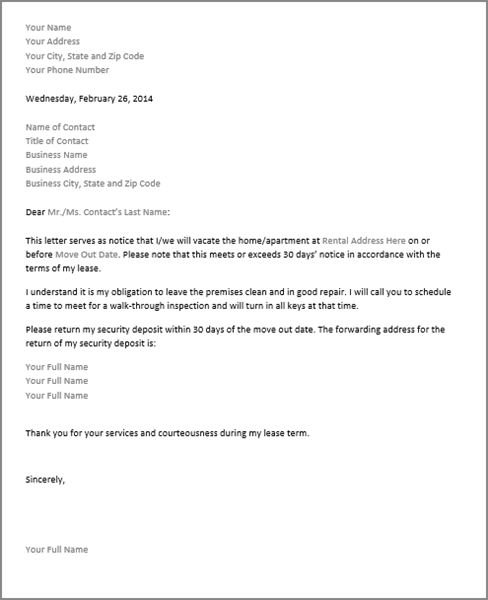
 Eviction Notice Forms for Every Possible Reason. When you need to evict a tenant, the first step in the process is to issue an Eviction Notice. Also referred to as a Notice to Vacate Letter, Notice to Quit, Eviction Notice Letter, Rental Eviction Notice, or Notice to Vacate Premises, it advices the tenant that they must vacate the property. The eviction notice must be a written notice, with contents and deadlines given as specified by your states termination statutes. Using an Eviction Notice provides a record of your attempt to evict the tenant before you pursue any needed legal action. If your tenant does not vacate the property, the court will determine the validity of the eviction notice and give a deadline by which the tenant must vacate the property. The length of time varies by state, but generally is five or more days after a judge makes a ruling. Although eviction notices are not very long, they are subject to a long list of strict legal requirements. The US Landlord and Tenant Act sets forth laws that universally apply to all landlords and tenants. In addition, each state has detailed rules that must be followed for eviction of a tenant. Before you begin the eviction process, check out the article on this site pertaining to your particular states eviction process. There are a number of reasons for all these rules and laws, the two most important of which are Eviction cases are very fast legal procedures, so strict adherence to the rules is a necessity. The tenants home is threatened, so the courts want to make sure there is adequate notice and time to respond. Reasons for an Eviction Notice. State laws set out very detailed requirements for the type of termination notice required, how they must be written and served, and even the reasons a tenant may be issued an eviction notice. Although the laws vary by state, most require a valid reason to evict a tenant, such as Failure to pay rent. Excessive lateness paying rent. Damage to property. Violating the lease agreement. The two most common reasons for issuing an eviction notice are non payment of rent and violation of lease provisions. If a tenant does not pay their rent on time, the landlord can serve or deliver to the tenant an eviction notice commonly called a Notice to Pay Rent or a Notice to Pay Rent or Quit. If the tenant is being evicted for a reason other than failure to pay rent, such as a lease violation, the landlord serves the tenant with an Eviction Notice giving a certain amount of time to correct the violation or vacate. Some states allow Unconditional Quit Notices, ordering the tenant to vacate the premises without an opportunity to pay the rent, or correct a rental agreement or lease violation if a tenant Engaged in illegal activity on the premises, such as drug dealing. Has been late with the rent more than one time. Repeatedly violates a significant lease or rental agreement clause. Seriously damaged the rental unit. Eviction Notice for Failure to Pay Rent. Although terminology and requirements vary somewhat from state to state, this type of eviction notice, generally referred to as a Pay Rent or Quit Notice, gives the tenant a specified number of days or weeks to pay the rent or move out. The quickest of the many eviction procedures, state laws have specific time periods that must be observed when dealing with nonpayment of rent. The tenant must pay the amount owed plus any associated late fees, as listed in the signed rental or lease agreement, or move out. If the tenant pays the full amount in the given time, usually 3 5 days there is no eviction. For example, the Texas Notice to Vacate gives the tenant 3 days to pay the rent or move out, and if they fail to do either the landlord can file the eviction lawsuit asking the court for possession, back rent and damages. Eviction Notice for Failure to Pay Rent on Time. Tenancy agreements include specific policies for paying rent, including due date. If a tenant does not pay rent on time, state laws require landlords to give tenants early notice prior to an eviction, usually more than 1. Some states have varying times for the notice period dependent upon the time of year. For example, in Pennsylvania, the past due rent notice period is 1. April 1 and September 1, and 3. September 1 and April 1. Eviction Notice for a Lease Violation. Often referred to as Cure or Quit Notices, this type of eviction notice is used when a tenant violates a term or condition of the lease or rental agreement. The tenant is given a set amount of time to correct or cure the violation and if they fail to do so, must move out. Some examples of situations where a lease violation eviction notice is served are Getting a pet. Allowing extra people stay in the rental property. Creating a disturbance or making loud noises that disturb others. Being a nuisance threatening the safety or health of other tenants or the property. State laws give varying times for correcting the lease violation, often five or ten days. If the tenant corrects the violation in the time specified, there is no eviction. Eviction Notice for Damage to Property. A landlord may file for an eviction if the tenant damages the property in excess of normal wear and tear. Normal wear and tear consists of such things as a few carpet stains or worn carpet at points of entrance. However, if a tenant puts a hole in the wall or destroys mounted light fixtures, the landlord may evict for these excessive damages to the property. Michigan is one state that has a 7 Day Notice for this particular situation. Damages must be caused by the tenant intentionally. If the tenant volunteers or agrees to have the damages fixed or to pay for them, it is up to the landlord to accept, or proceed with an eviction and serve a Notice to Quit and initiate eviction proceedings. Eviction Notice for Holdovers. Many leases automatically switch to month to month after the initial lease term has ended. It is quite common that after a lease ends the landlord and tenant are happy with the continuing month to month arrangement. When the landlord is ready to end the ongoing arrangement, he needs to serve an eviction notice usually a 3. Day Notice. However this is more of a friendly eviction notice as opposed to an adversarial notice, since it is just ending a month to month as opposed to demanding rent or complaining of a lease violation. For example, South Carolina is one of many states where a 3. Day Notice is used in this situation. If a tenant occupies leased property without the landlords permission after the lease expires, that tenant is called a holdover. The length of time for the notice is dependent upon how frequently the tenant pays rent. For example, if the tenant pays monthly rent, the landlord must provide at least a thirty day notice. Unconditional Quit Notice. Some states allow landlords to issue an eviction notice where the tenant cannot do anything to correct the error. This notice is used when the tenant faces eviction for extreme violations like destroying property or not paying rent for months even if the tenant pays the rent or attempts to correct the situation. There is generally a much longer deadline to respond and these notices frequently apply to month to month tenancy. If you wish to evict the tenant for your own reasons, your states laws may allow you to do so. Additionally, in some states a landlord can evict a tenant with a 3. If the building is sold. If the landlord wants to live in the unit or use it for a different purpose.